 Image 1 of 1
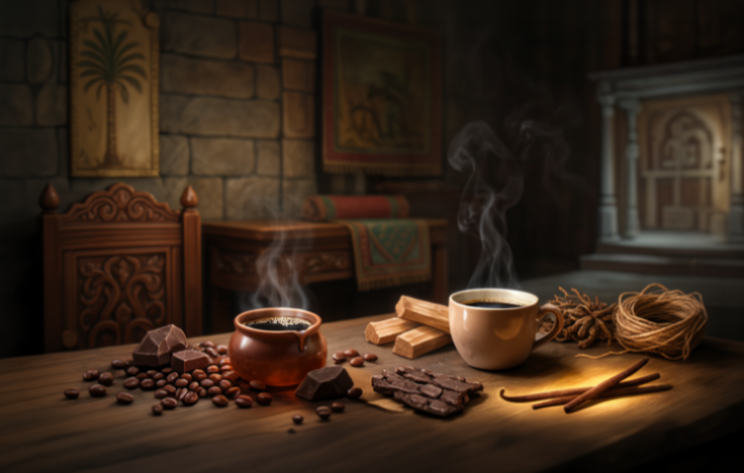
Chocolat Delight is a sophisticated, noir-gourmand journey. It opens with the ethereal sweetness of Elderflower, quickly descending into a heart of bitter Cacao and roasted Coffee. As it lingers, the scent transforms into a smoky, leathery embrace of Nagarmotha and Palo Santo, leaving a trail of creamy Vanilla and dry Cedar on the skin.
Cacao:
Cacao beans were so valuable they were used as currency. In spiritual practice, cacao was often ground with chili and maize to create a bitter, frothy drink used in marriage ceremonies, baptisms, and funerary rites.
Coffee (Coffea arabica)
The history of coffee as an aromatic is deeply tied to the Sufi monks of the 15th century and the legends of the Ethiopian highlands.
• The "Heavenly Aroma" Legend: According to folklore, when the first coffee berries were thrown into a fire by monks who thought they were "the work of the devil," the resulting aroma was so "heavenly" that they raked the beans out of the embers, crushed them, and brewed them to stay awake during nightly prayers.
• Aromatic Energy: Historically, coffee was valued for its ability to clear the mind. In incense making, roasted coffee beans are a powerful odor-neutralizer and are often burned on charcoal in Middle Eastern traditions to cleanse a room of stagnant energy or heavy cooking smells, providing an "olfactory reset."
Cedar:
One of the oldest aromatics used by humanity, Cedar was a primary incense ingredient in Ancient Egypt, where it was used both for purification and embalming. In Himalayan and Native American traditions, it is burned to "clear the air" of negative energy. Historically, its dry, resinous smoke represents endurance and incorruptibility.
Palo Santo (Bursera graveolens)
Known as "Holy Wood," Palo Santo has been used by Incan shamans and South American indigenous cultures for centuries. Unlike other woods, it is only harvested from fallen trees that have aged for years. In ritual incense, it is prized for its "liminal" scent—a bridge between citrusy top notes and deep woody resins—believed to invite good fortune.
Nagarmotha (Cyperus scariosus)
Also known as Cypriol, this root has deep roots in Indian Ayurvedic traditions. It has been used for centuries to scent clothes (the "Vastra") and as a fixative in traditional Agarbatti (incense sticks). Historically, it provides the "earthy, soul-grounding" base that helps lighter floral oils adhere to a bamboo core.
Vetiver
Often called the "Oil of Tranquility" in India, Vetiver roots were traditionally woven into mats and screens. When dampened by rain, they would scent the air. In incense making, it is a foundational "Earth" element, used since antiquity to provide a smoky, cooling finish to complex botanical blends.
Chocolat Delight is a sophisticated, noir-gourmand journey. It opens with the ethereal sweetness of Elderflower, quickly descending into a heart of bitter Cacao and roasted Coffee. As it lingers, the scent transforms into a smoky, leathery embrace of Nagarmotha and Palo Santo, leaving a trail of creamy Vanilla and dry Cedar on the skin.
Cacao:
Cacao beans were so valuable they were used as currency. In spiritual practice, cacao was often ground with chili and maize to create a bitter, frothy drink used in marriage ceremonies, baptisms, and funerary rites.
Coffee (Coffea arabica)
The history of coffee as an aromatic is deeply tied to the Sufi monks of the 15th century and the legends of the Ethiopian highlands.
• The "Heavenly Aroma" Legend: According to folklore, when the first coffee berries were thrown into a fire by monks who thought they were "the work of the devil," the resulting aroma was so "heavenly" that they raked the beans out of the embers, crushed them, and brewed them to stay awake during nightly prayers.
• Aromatic Energy: Historically, coffee was valued for its ability to clear the mind. In incense making, roasted coffee beans are a powerful odor-neutralizer and are often burned on charcoal in Middle Eastern traditions to cleanse a room of stagnant energy or heavy cooking smells, providing an "olfactory reset."
Cedar:
One of the oldest aromatics used by humanity, Cedar was a primary incense ingredient in Ancient Egypt, where it was used both for purification and embalming. In Himalayan and Native American traditions, it is burned to "clear the air" of negative energy. Historically, its dry, resinous smoke represents endurance and incorruptibility.
Palo Santo (Bursera graveolens)
Known as "Holy Wood," Palo Santo has been used by Incan shamans and South American indigenous cultures for centuries. Unlike other woods, it is only harvested from fallen trees that have aged for years. In ritual incense, it is prized for its "liminal" scent—a bridge between citrusy top notes and deep woody resins—believed to invite good fortune.
Nagarmotha (Cyperus scariosus)
Also known as Cypriol, this root has deep roots in Indian Ayurvedic traditions. It has been used for centuries to scent clothes (the "Vastra") and as a fixative in traditional Agarbatti (incense sticks). Historically, it provides the "earthy, soul-grounding" base that helps lighter floral oils adhere to a bamboo core.
Vetiver
Often called the "Oil of Tranquility" in India, Vetiver roots were traditionally woven into mats and screens. When dampened by rain, they would scent the air. In incense making, it is a foundational "Earth" element, used since antiquity to provide a smoky, cooling finish to complex botanical blends.